
What a 50-Set MOQ Really Means: Small-Batch Economics in Custom Mahjong
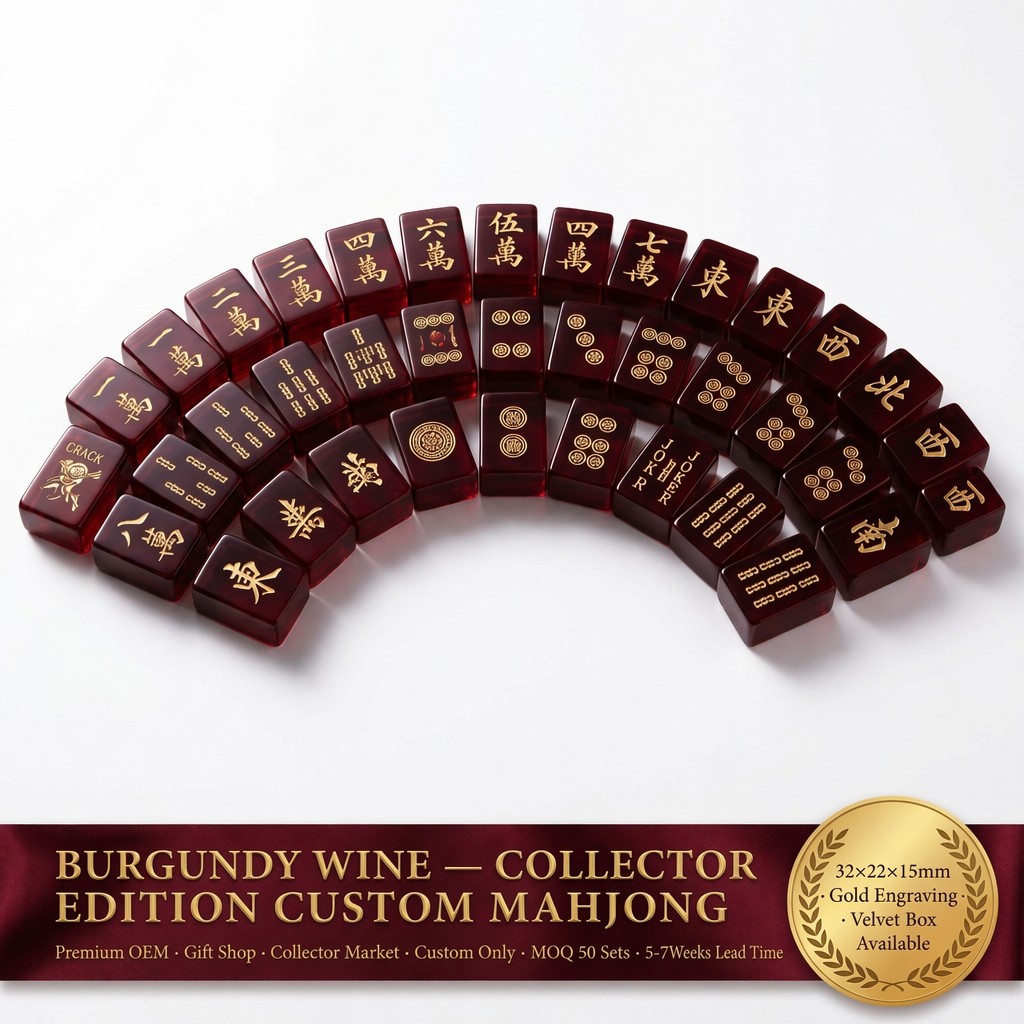
Why our custom minimum sits at 50 sets, what it enables for small brands and first-time importers, and how to structure a first order so the second one is cheaper.
The Number Behind the Number
A 50-set minimum is not arbitrary. Below it, per-set setup costs — compound changeovers, laser programming, sample amortization — overwhelm the product cost. At 50, a serious custom program becomes viable for a brand that is testing a market rather than betting a warehouse.
What 50 Sets Actually Buys
Full custom treatment: Pantone-matched tiles, engraved artwork, custom jokers and tile backs, matched accessories and custom packaging. The first 50-set order is effectively a market test that produces sellable inventory — not a throwaway sample run.
Many of our longest-running brand programs started exactly this way: one colorway, 50 sets, a craft-fair table.
Structuring the First Order
Three practical moves. First, keep the first build on one of our existing tile formats — spend your differentiation budget on color, artwork and packaging, not new geometry. Second, order spare tiles and accessories with the run; they are cheap now and precious later. Third, approve the sample slowly — every rushed approval tax is paid twice.
Ask for the tier pricing of 100 and 200 sets with the same quote; knowing the ladder changes how brands plan their second order.
The Reorder Dividend
The second order is materially cheaper: tooling exists, compounds are locked, golden units are sealed. Lead time shortens because artwork review disappears. Brands that treat order one as infrastructure — not just inventory — see the margin difference immediately.
If You Are Smaller Than 50
Sample sets exist for approval and photography; some programs combine SKUs to reach the line. Tell us the real constraint and we will tell you the honest options — including waiting until the budget fits, which is sometimes the right advice.