
How to Approve a Custom Mahjong Order: Samples, Golden Units and Pre-Ship QC
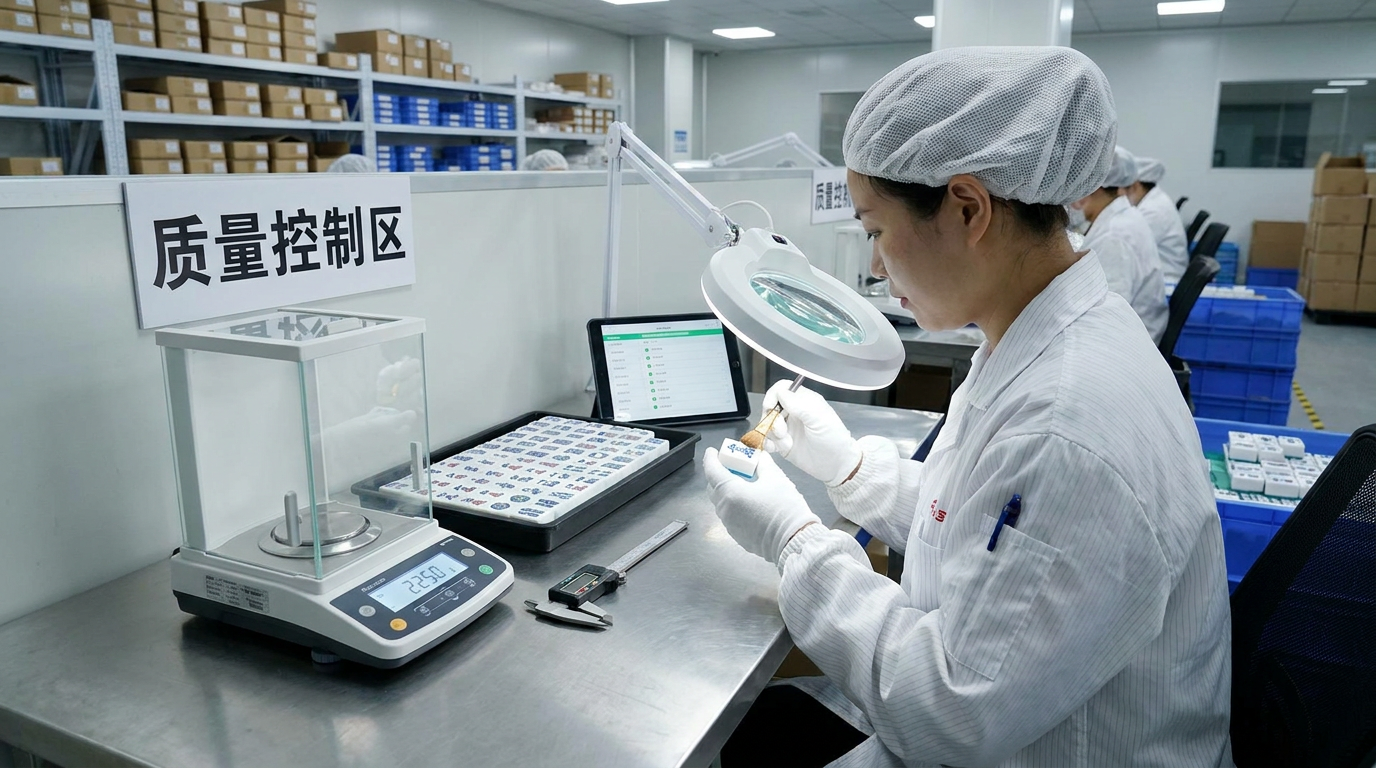
A practical approval workflow for OEM mahjong buyers: what a pre-production sample must show, how golden units lock quality, and which QC evidence to request before a container ships.
Why Approval Discipline Matters
Custom mahjong fails in predictable ways: color drift between sample and bulk, engraving depth that varies, accessories that do not match the palette. Every one of those failures is preventable with a structured approval process — the one we run on all OEM projects.
Step 1 — The Pre-Production Sample
A real, finished set — not photos, not a single tile. Inspect it under your own lighting: check tile color against your Pantone reference, run a finger over engraved lines, stack tiles to feel weight consistency, and photograph everything.
Sign off only when you would accept a thousand copies of exactly this set, because that is what approval legally and practically means.
Step 2 — Golden Units
After approval, we seal retained golden units at the factory. Bulk production is audited against them, not against memory or emails. Keep your own sealed set too; it settles any later dispute in minutes.
Golden units also protect reorders. Two years from now, "match the original" refers to a physical artifact, not a faded JPEG.
Step 3 — In-Process Checks Worth Knowing About
During production we run dimensional checks at cutting, engraving depth verification per laser cell, and infill-evenness inspection after coloring. For premium programs, buyers may add a third-party mid-production inspection; we host them routinely.
Step 4 — Pre-Ship Evidence
Before packing, the full-set audit verifies tile count, joker count, accessory completeness and appearance. Request the photo set and, for larger programs, a video of the audit. It costs little and replaces weeks of claim correspondence.
Only after that audit does the set go into export cartons with the documentation your market requires.
A Checklist You Can Copy
Approved physical sample retained by both sides; Pantone references written into the spec; engraving depth and infill color stated numerically; accessory and packaging specs itemized; audit evidence defined before production starts. Five lines that prevent most disputes in this industry.